

Shipping partner onboarding is the process of connecting a retailer’s systems, teams and delivery operations with a new carrier. At FleetOptics, carrier onboarding starts with understanding how the client ships today, which systems are involved, what data needs to move between them and what teams need to see once a parcel enters our network. From there, we agree on the carrier integration, testing and launch steps.
How quickly can we complete the carrier integration?
Will the technology work with our systems?
How will tracking data flow?
What happens when there is a delivery exception?
When can we start shipping?
But there’s one question that doesn’t always get enough attention:
What will it actually be like to get up and running with this partner?
A new carrier can offer strong technology, reliable delivery performance and competitive pricing. But if carrier onboarding is complicated, slow or frustrating, the relationship begins with unnecessary friction.
What Should a Shipping Partner Onboarding Process Include?
Adding a new delivery partner touches a lot of teams. Technology needs to connect. Operations needs to understand the new process. Customer service needs visibility into deliveries. Reporting needs to work. And everyone needs to know who to call when something doesn’t go as planned.
At FleetOptics, we aim to make onboarding both streamlined and well supported.
That means agreeing on clear steps, owners and decisions based on the client’s systems and shipping process. High-touch support means the client knows who to contact, gets answers to questions and understands what needs to happen next.
When an issue comes up, we bring the right people together to resolve it and keep the launch moving.
Six Steps for Successful Carrier Onboarding
- Define requirements: Understand the client’s systems, shipping process, operational needs and reporting requirements.
- Complete the integration: Map and connect the systems and data needed for the agreed workflow, including orders, labels, manifests, tracking events and delivery information.
- Test the journey: Test the agreed workflow from order creation through pickup, tracking, delivery, proof of delivery and reporting. Include exception scenarios so teams know what happens when a delivery cannot be completed as planned.
- Prepare teams: Confirm who owns each step, how issues will be escalated and what the client’s teams will be able to see.
- Launch with hypercare: Stay close to the client during early shipments, monitor results and work through issues together.
- Review performance: Review delivery data with the client, identify improvements and confirm who will take action.
Carrier API Integration Is More Than a Technical Connection
Carrier API integration matters, but technology is only one part of shipping partner onboarding. The systems, data and operating process must work together for the client’s team and support the complete delivery journey.
That includes how orders are transmitted, shipping labels and manifests are created, tracking events are shared, proof of delivery is accessed, delivery exceptions are handled and carrier performance is reported.
- Can orders flow properly?
- Are labels and manifests working?
- Are tracking events coming through?
- Can customer service see what’s happening with a delivery?
- How are exceptions communicated?
- Is proof of delivery available?
- Can you get the performance data you need?
These details can make the difference between being technically live and being ready to ship with confidence. A complete carrier onboarding process validates the technology, operational workflow and customer visibility before launch.
How to Test a New Shipping Partner Before Launch
Before launching a new delivery partner, test the agreed customer journey from order creation through reporting and early post-launch support:
Order Creation → Carrier Integration → Pickup → Tracking → Delivery → Customer Notification → Reporting → Hypercare
Test scenarios outside the happy path as well. What happens if an address is incorrect or a delivery cannot be completed? Who is notified, how is the exception managed and what information can the client’s team see?
Working through those questions before launch gives both teams a chance to resolve gaps before live customer orders are moving through the network.
Why Post-Launch Hypercare Is Essential for Carrier Onboarding
Go-live is not the end of carrier onboarding. It is the point when teams begin validating the process with real shipments, tracking events and delivery exceptions.
During the agreed post-launch hypercare period, we review live shipments with the client, identify issues and opportunities, and confirm who will take action. Effective hypercare requires communication, transparency and clear accountability.
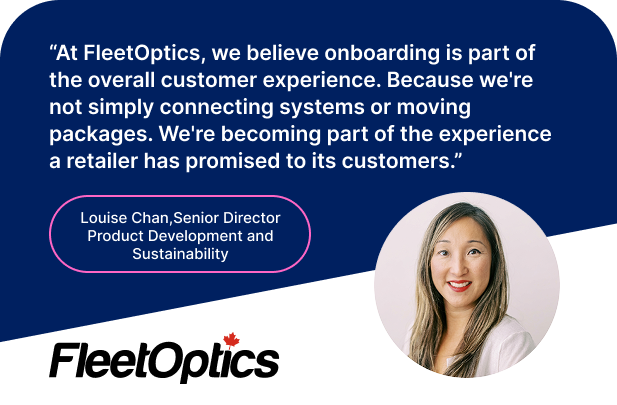
“I want clients to know what they need to provide, what we’re responsible for and what we’ll test together before launch. The technical connection is one part of onboarding. We also need the operating process, tracking and exception handling to work for the client’s teams.”
– Louise Chan, Senior Director of Product Development & Sustainability, FleetOptics
At FleetOptics, our Integration and Onboarding team works with Sales, our internal teams and the client to make onboarding part of the overall customer experience.
Our goal is to make sure the client is ready to ship and that the teams supporting those deliveries understand what to expect. A successful delivery experience starts before the first parcel is picked up.
Shipping Partner Onboarding FAQ
Carrier onboarding timelines depend on integration requirements, operational complexity, testing scope and team readiness. A documented plan with clear owners, milestones and launch criteria helps reduce unnecessary delays.
Test the full delivery journey: order flow, shipping labels, manifests, pickup, tracking events, customer notifications, delivery exceptions, proof of delivery and performance reporting.
A carrier API integration connects the data and workflows required across the delivery journey. It may include order transmission, labels, manifests, tracking updates, proof of delivery, exception data and reporting.
Post-launch hypercare is a focused support period after go-live. The carrier and client monitor real shipments, resolve issues quickly, validate data and fine-tune the operation.
Retailers should evaluate carrier technology, delivery performance, operational fit, geographic coverage, tracking visibility, reporting, exception management, onboarding support and post-launch accountability.
Key Takeaway
Effective shipping partner onboarding combines carrier API integration, end-to-end testing, operational readiness, delivery visibility and post-launch hypercare. Addressing each area before go-live helps teams launch with confidence and improve the customer delivery experience.
Preparing to Onboard a New Shipping Partner?
Use our 10-question Integration Readiness Checklist to evaluate a potential shipping partner, identify open questions and align owners, technical requirements, testing milestones and launch dependencies.
A successful shipping partner onboarding process should answer more than one question:
“Can we connect the systems?”
It should also answer:
“Are our systems, teams, processes and support model ready to deliver a reliable customer experience together?”